Karl (not Groucho)Marx famously said that the capitalist will "sell the rope that hangs him." I think Karl didn't fully plumb the depths of the capitalist heart.
Wednesday, July 9, 2008
Buying the rope to hang us with
Karl (not Groucho)Marx famously said that the capitalist will "sell the rope that hangs him." I think Karl didn't fully plumb the depths of the capitalist heart.
Tuesday, July 8, 2008
American Airlines Announces Pay Toilets
Dallas/Ft. Worth. American Airlines announced today that it will install pay toilets on all domestic flights in an effort to recapture the costs associated with flying shit. Tokens will be available at $1.50 each, one can be used for number one and two for number two. Asked about the impact on the traveling public, American's spokeman for defecatory initiatives, John Commodious, said "it's perfectly fair as full bladders and intestines of 300 pound Americans often weigh over 30 pounds per person." Adding that "With 160 passengers, that's a lot of shit!"
Monday, July 7, 2008
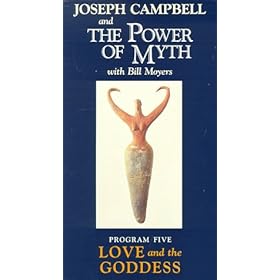
The Gift of the Goddess (Why Hunters Never Leave Their Mamas)
Man is both gift and goddess, both life and matter. (“Men” and “man” are used here to denote the male gender and not “mankind” generally). Birth, weaning, ritualizing the hunt, questing for father, and finally dying, men are part of the womb, the genderless Upanishads goddess incarnate. No matter the journey, men can’t stray far from the source, the goddess. “Myth,” according to Campbell, is the “sublimation of mother nature” (205). Does this mean goddess myths are archetypal of all myth? Full text at blogowitz-unabridged
The Hero’s Adventure (Journey into the Soul)
Just how far down the rabbit hole do you want to go? The mythic self explorer must recognize the rabbit hole, leave behind Adriande’s thread, and sojourn deeply. However, the rabbit hole is obscured by a thicket of modernity, theology, and even primitive culture. Worse still, the rabbit hole masquerades as something else. Scythe the thicket, unmask religion’s holy disguise, and mine the holey depths. Full text at blogowitz-unabridged
The Journey Inward
The “mystery” is the internalization of the exterior – the self actualization of the world and its myths – but Western religion, says Campbell, corrupts the “journey inward” by destroying metaphor with “facts,” and creating an artificial dualism that “un-deifies” humanity and vilifies nature. God looses transcendence; man, his innocence. Full text at blogowitz-unabridged
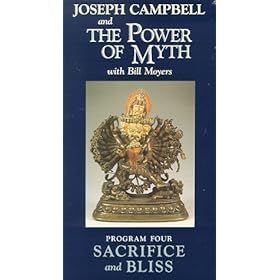
Sacrifice and Bliss
Throughout The Power of Myth the stuff of myth is cross-cultural, universal, and archetypical (biologically based), but in “Sacrifice and Bliss” Campbell first introduces “environmental determinism,” the notion that local “landscape” sculpts that “stuff.” Underlying the landscape imagery is a far deeper scientific truth – we are a living fresco inseparable from our plaster landscape. However, biblical dualism wrenches life from its own gut destroying both fresco and wall. Full text at blogowitz-unabridged
Sunday, July 6, 2008
Loggerhead Shrike (Lanius ludovicianus)
Fun Facts--Unusual Behavior: The only song bird that is also a bird of prey, “Vlad the impaler” will shish kabob prey on sharp objects or wedge it between tree branches. Unlike the human female wooed by ostentations displays of wealth and waste, the female shrike is more like “Clara” (“where’s the beef!”) in the old Burger King commercial. [Full article at blogowitz-unabridged]
Saturday, July 5, 2008
Datura wrightii (Western Jimson-weed)
Form, Function and Symbolism—Exposing the False Tricodomy and Exploring Universal Progression
[Written for an architectural history class in 2007; click on sections for full text]
Form, function and symbolism are as inextricable as mind and body, Cartesian dualism, notwithstanding. This paper explores the phenomenological aspects of how these superficially disparate elements are experientially identical, and how, throughout history, they inevitably progress from simplicity, to mastery and ultimately to decadence.
PART I: A UNIFIED FIELD OR “TRINITY” THEORY
Exploring form, function, and especially symbolism from the observer’s POV rather than the architect’s, unlocks myriad existential possibilities; the architect just one existence in billions caught in freeze-frame infinite time. Serious criticism requires observer-facing analysis as people “...can never…experience form without deriving meaning from it” (Scully 123).
PART II: PROGRESSION THROUGH UNIVERSAL SYMBOLS
Civilizations’ timelines are captured in the architecture of universal progression: embryonic simplicity, inchoate mastery, “high” mastery, sometimes a Mannerist revolt against cliché, and inevitably “late” Rococo decadence which, given sufficient time, suffers a backlash, e.g., the modernist backlash against Rococo articulated in Adolf Loos’ article, Ornamentation and Crime. Part II of this paper demonstrates cross-cultural examples of universal progression and even proposes a genetic framework for their understanding.
PART III: SUMMARY, CONCLUSION, BIBLIOGRAPHY
Where Do We Come From? Who Are We? Where Are We Going? (Paul Gauguin)
The unity of form, function and symbolism appears self evident as does the progression theory. But how will modernity’s “progression” appear in hindsight: early, middle, high, or most likely, late? History may record the “New American Century” as our last. However, such characterization is generally unsupported by architectural indicia of earlier progressions. Nevertheless, we can learn from the Romans whose experience most closely parallels our own. With its numerous massive constructions made possible by the invention of concrete and standardization, Roman decadence, like ours, flaunts Greek notions of natural balance and proportion with sheer volume and numbers.
Form, function and symbolism are as inextricable as mind and body, Cartesian dualism, notwithstanding. This paper explores the phenomenological aspects of how these superficially disparate elements are experientially identical, and how, throughout history, they inevitably progress from simplicity, to mastery and ultimately to decadence.
PART I: A UNIFIED FIELD OR “TRINITY” THEORY
Exploring form, function, and especially symbolism from the observer’s POV rather than the architect’s, unlocks myriad existential possibilities; the architect just one existence in billions caught in freeze-frame infinite time. Serious criticism requires observer-facing analysis as people “...can never…experience form without deriving meaning from it” (Scully 123).
PART II: PROGRESSION THROUGH UNIVERSAL SYMBOLS
Civilizations’ timelines are captured in the architecture of universal progression: embryonic simplicity, inchoate mastery, “high” mastery, sometimes a Mannerist revolt against cliché, and inevitably “late” Rococo decadence which, given sufficient time, suffers a backlash, e.g., the modernist backlash against Rococo articulated in Adolf Loos’ article, Ornamentation and Crime. Part II of this paper demonstrates cross-cultural examples of universal progression and even proposes a genetic framework for their understanding.
PART III: SUMMARY, CONCLUSION, BIBLIOGRAPHY
Where Do We Come From? Who Are We? Where Are We Going? (Paul Gauguin)
The unity of form, function and symbolism appears self evident as does the progression theory. But how will modernity’s “progression” appear in hindsight: early, middle, high, or most likely, late? History may record the “New American Century” as our last. However, such characterization is generally unsupported by architectural indicia of earlier progressions. Nevertheless, we can learn from the Romans whose experience most closely parallels our own. With its numerous massive constructions made possible by the invention of concrete and standardization, Roman decadence, like ours, flaunts Greek notions of natural balance and proportion with sheer volume and numbers.
Thursday, July 3, 2008
The Bible as Warrior-Herder Mythology: Impact of “Edible Landscape”
[My spin on the origins of the Hebrew Bible, written in June, 2007 for the class "Myths and Legends"]
Summary
Herding was a novel concept that forged its own unique mythology, the Bible. This paper investigates how prehistoric hunting myth co-evolved, first with plant, then with animal domestication resulting in two great mythologies: agrarian goddess and Hebrew God. Biblical dualism is symbolic of the dualism suffered by a nomadic herding people caught between their hunter-gatherer ancestors and their agrarian neighbors. A new mythology, the Bible, served to make sense of their place in the world.
Historical Background

Tens of thousands of years before Abraham, the sub-Saharan ancestors of the Semites were early hunter-gatherers who hunted gazelle and presumably celebrated hunter mythologies. Things changed. Jared Diamond estimates that plants were first domesticated in the Fertile Crescent by 8500 B.C. and animals by 8000 B.C. (362). The hunter mythology lost relevance as new agrarian societies (e.g. 4000 B.C. Egypt) slowly developed earth-goddess based mythology. Eventually, the remaining hunters became herders, outside agrarian mythology. There was simply no established mythology for herders, just as there’s no established mythology for modern man; these things take time.
Let’s view the Hebrews through their pre-Egypt herder “landscape.” Imagine a tribe of mythic hunters who overexploited gazelle, (Diamond 142) forced to make a career choice: herding or farming. Farming was already established, widespread and required legal land ownership or lease, concepts foreign to hunter-gatherers. However, hunters knew animals, so they became the domesticators, raising animals for meat, diary, and wool.
Hebrews lorded over, and were mired in, an ever-moving mammalian mass of sheep and goats that were noisy, aggressive, wandering, cud-chewing, regurgitating, ruminating, festering, flatulating, burping, baaing, bleating, copulating, menstruating, gestating, birthing, lactating, dying, defecating, urinating, and perhaps most significantly, insatiably consuming strangers’ grass and farmland. Cont'd at unabridged-blogowitz
Summary
Herding was a novel concept that forged its own unique mythology, the Bible. This paper investigates how prehistoric hunting myth co-evolved, first with plant, then with animal domestication resulting in two great mythologies: agrarian goddess and Hebrew God. Biblical dualism is symbolic of the dualism suffered by a nomadic herding people caught between their hunter-gatherer ancestors and their agrarian neighbors. A new mythology, the Bible, served to make sense of their place in the world.
Historical Background
Tens of thousands of years before Abraham, the sub-Saharan ancestors of the Semites were early hunter-gatherers who hunted gazelle and presumably celebrated hunter mythologies. Things changed. Jared Diamond estimates that plants were first domesticated in the Fertile Crescent by 8500 B.C. and animals by 8000 B.C. (362). The hunter mythology lost relevance as new agrarian societies (e.g. 4000 B.C. Egypt) slowly developed earth-goddess based mythology. Eventually, the remaining hunters became herders, outside agrarian mythology. There was simply no established mythology for herders, just as there’s no established mythology for modern man; these things take time.
Let’s view the Hebrews through their pre-Egypt herder “landscape.” Imagine a tribe of mythic hunters who overexploited gazelle, (Diamond 142) forced to make a career choice: herding or farming. Farming was already established, widespread and required legal land ownership or lease, concepts foreign to hunter-gatherers. However, hunters knew animals, so they became the domesticators, raising animals for meat, diary, and wool.
Roadrunner
GREATER ROADRUNNER (Geococcyx californianus)
Fun Facts--Mating: Male courts female with cooing and serves her dinner sans wine. He conducts a loud, boisterous mating dance with foot stomping, tail-wagging, and deep bowing. They mate upon completion of his “dervish.” They also mate for life; during their 4-5 year lifespan divorce is not an option. Perhaps instructive for human fidelity: food may be exchanged during copulation.
Cont'd
[Link to unabridged-blogowitz]
Subscribe to:
Posts (Atom)